
The U.S. Department of Energy (DOE) says many EVs can travel 200–300 miles on one charge. FuelEconomy.gov says EPA EV range comes from weighted, adjusted test-cycle distances. DOE says hills, heavy loads, and frequent heating or air conditioning can reduce range and advises leaving extra buffer.
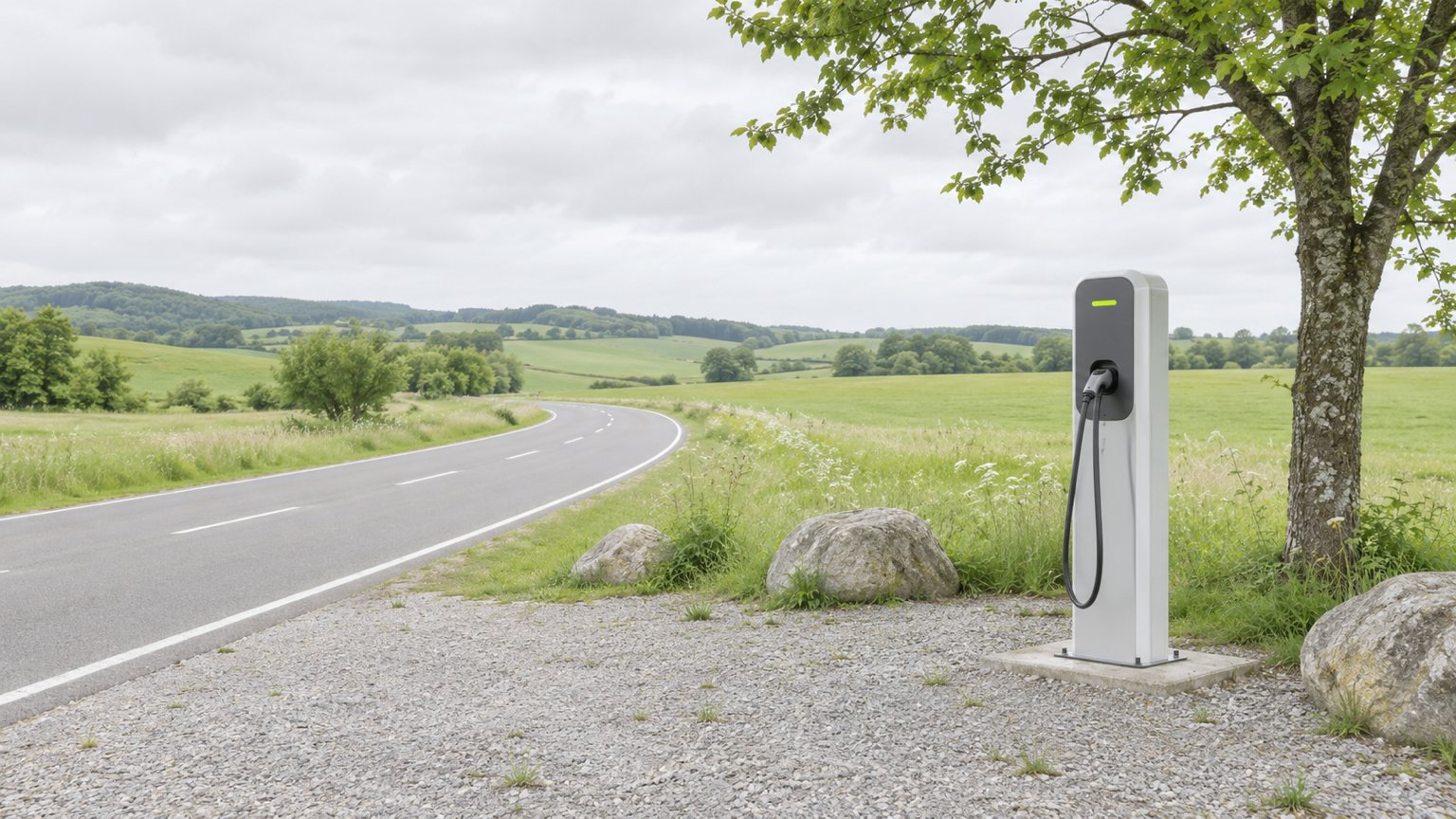
How far does an electric car go on one charge?
The U.S. Department of Energy says many electric vehicles can travel 200–300 miles on one charge.[1] EPA's February 2026 report gives average new battery-electric vehicle range as 292 miles for model year 2024.[2] The report says those range values come from the combined fuel-economy-label figure, weighted 55% city and 45% highway.[2:1]
What range do current EV versions show?
Range is version-specific, so compare the named trim and drivetrain rather than the model name alone:
| U.S. version | EPA-estimated range |
|---|---|
| 2026 Kia Niro Electric Wind | 253 mi EPA |
| 2027 Hyundai Ioniq 5 SEL RWD | 318 mi EPA |
For another model-specific breakdown, read the Chevrolet Equinox EV range answer; to browse more options, see the long-range EV list.
What does an EPA range estimate mean?
EPA's published EV range is test-derived: the distances from test cycles are weighted and adjusted to produce an overall range.[3] Hyundai says the 2027 Ioniq 5 SEL EPA estimate is based on a fully charged battery and for comparison only.[4] It says battery capacity decreases with time and use; actual range varies with vehicle options, driving conditions and habits, vehicle and battery condition, battery temperature, and outside temperature.[4:1]
When should I leave extra range as a buffer?
DOE advises expecting reduced range and leaving extra buffer on hilly terrain, when hauling heavy loads, or with frequent heating or air-conditioning use.[1:1] If one of those applies, plan the trip with room to reach a charger; SuliHuli's cold-weather range guidance covers winter conditions.
U.S. Department of Energy, “Alternative Fuels Data Center: Electric Vehicles for Consumers” (read 2026-11-09): DOE range and planning guidance ↩︎ ↩︎
U.S. Environmental Protection Agency, “The 2025 EPA Automotive Trends Report: Fuel Economy, and Technology since 1975” (EPA-420-R-26-001, February 2026): 2025 report PDF ↩︎ ↩︎
U.S. Department of Energy, “Frequently Asked Questions” (read 2026-11-09): EPA EV range method ↩︎
Hyundai USA, “2027 IONIQ 5 SEL | Trim Features & Options | Hyundai USA” (read 2026-11-09): 2027 IONIQ 5 SEL range estimate ↩︎ ↩︎