
EV water may be normal A/C condensate only under named conditions: Tesla Model 3's small dehumidifying pool; Renault 5 water after prolonged A/C use for first registrations 23 Oct 2024–13 Apr 2025; U.S. Kia EV6 CV1A 2026 water during or after A/C.[^1][^2][^4] Tesla flags abnormal deposits as possible leaks; Renault directs operating faults to an approved dealer; Kia directs low reservoir coolant to an authorized dealer.[^1][^2][^5] None sets a stop-driving rule for water alone.[^1][^2][^4]
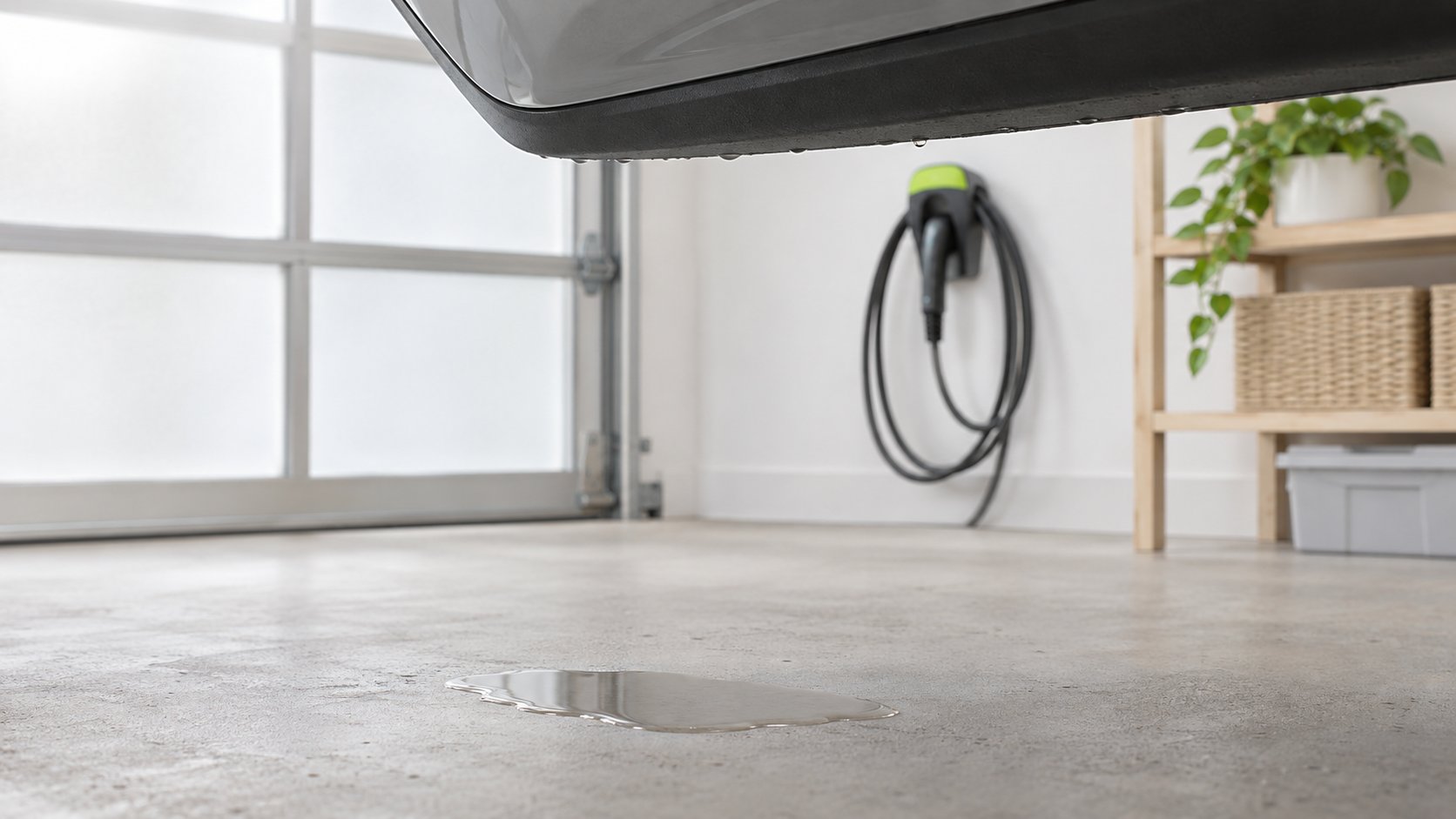
When is water under an EV normal?
Air-conditioning water can be normal, but the exact condition depends on the vehicle and manual edition.[1][2][3]
Air-conditioning condensate is water produced as the system removes moisture.[1:1] Each row gives the condition stated in the manufacturer's guidance for that specific vehicle.
| Vehicle and source | Condition the source calls normal |
|---|---|
| Tesla Model 3 service guidance | A small pool of water from the A/C dehumidifying process is normal.[1:2] |
| Renault 5 E-Tech, manual for first registrations 2024-10-23 through 2025-04-13 | Water under the vehicle after prolonged A/C use is normal condensation.[2:1] Renault says to select the manual edition that matches the vehicle's first-registration date.[4] |
| U.S. Kia EV6 CV1A 2026 manual | Water dripping from the A/C during or after use is normal.[3:1] |
What service guidance do these sources give?
Service directions are specific to the model and system; the cited sources do not diagnose an unknown puddle.[1:3][2:2][3:2]
- Tesla Model 3. Tesla says abnormal fluid deposits underneath might indicate a leak. It says battery-coolant and brake-fluid levels should be checked only by Tesla or a professional automotive repair shop.[1:4]
- Renault 5 E-Tech, 2024-2025 manual period. For an operating fault, Renault says to contact an approved dealer and not to open the refrigerant circuit; its fluid may damage eyes or skin.[2:3]
- U.S. Kia EV6 CV1A 2026. If the coolant level in the reservoir is low, Kia directs the owner to an authorized dealer.[5] Refrigerant-system service is for trained and certified technicians.[6]
Should I stop driving when I see water under my EV?
The manuals reviewed do not set one stop-driving threshold for water beneath every EV.[1:5][2:4][3:3]
Water beneath an EV can be normal air-conditioning condensate, but only if the exact model guidance describes the same condition.[1:6][2:5][3:4] Do not use color or appearance alone to identify an unknown liquid under an EV. Follow the service instructions for your vehicle and manual edition. For Renault 5, choose the manual period by the vehicle's first-registration date.[4:1]
A charging-start failure is a separate problem; see our answer to why an electric car may not charge at home. Browse SuliHuli answers for other ownership questions.
Tesla, "Model 3 Do It Yourself" (read 2026-11-11). Tesla Model 3 fluid guidance ↩︎ ↩︎ ↩︎ ↩︎ ↩︎ ↩︎ ↩︎
Renault, "Air conditioning: information and advice on use" (Renault 5 manual period for first registrations 2024-10-23 to 2025-04-13; read 2026-11-11). Renault 5 E-Tech air-conditioning guidance ↩︎ ↩︎ ↩︎ ↩︎ ↩︎ ↩︎
Kia, "Owner maintenance" (U.S. EV6 CV1A 2026 manual; read 2026-11-11). Kia EV6 owner-maintenance guidance ↩︎ ↩︎ ↩︎ ↩︎ ↩︎
Renault, "Edition Period" (read 2026-11-11). Renault 5 manual edition selector ↩︎ ↩︎
Kia, "Coolant" (U.S. EV6 CV1A 2026 manual; read 2026-11-11). Kia EV6 coolant guidance ↩︎
Kia, "Air conditioning" (U.S. EV6 CV1A 2026 manual; read 2026-11-11). Kia EV6 air-conditioning guidance ↩︎