
Yes. From October 21, 2026, Class F has permitted qualifying pavement-embedded cable channels in England without an individual planning application. The right applies only to a channel installed by, on behalf of, or with a highway authority's authorization; it excludes a scheduled-monument site, a listed building's curtilage, and a conservation area. The Department for Transport's guidance, updated November 4, 2026, says permissions must be sought from the local highway and/or local planning authority before installation, depending on the ownership model.
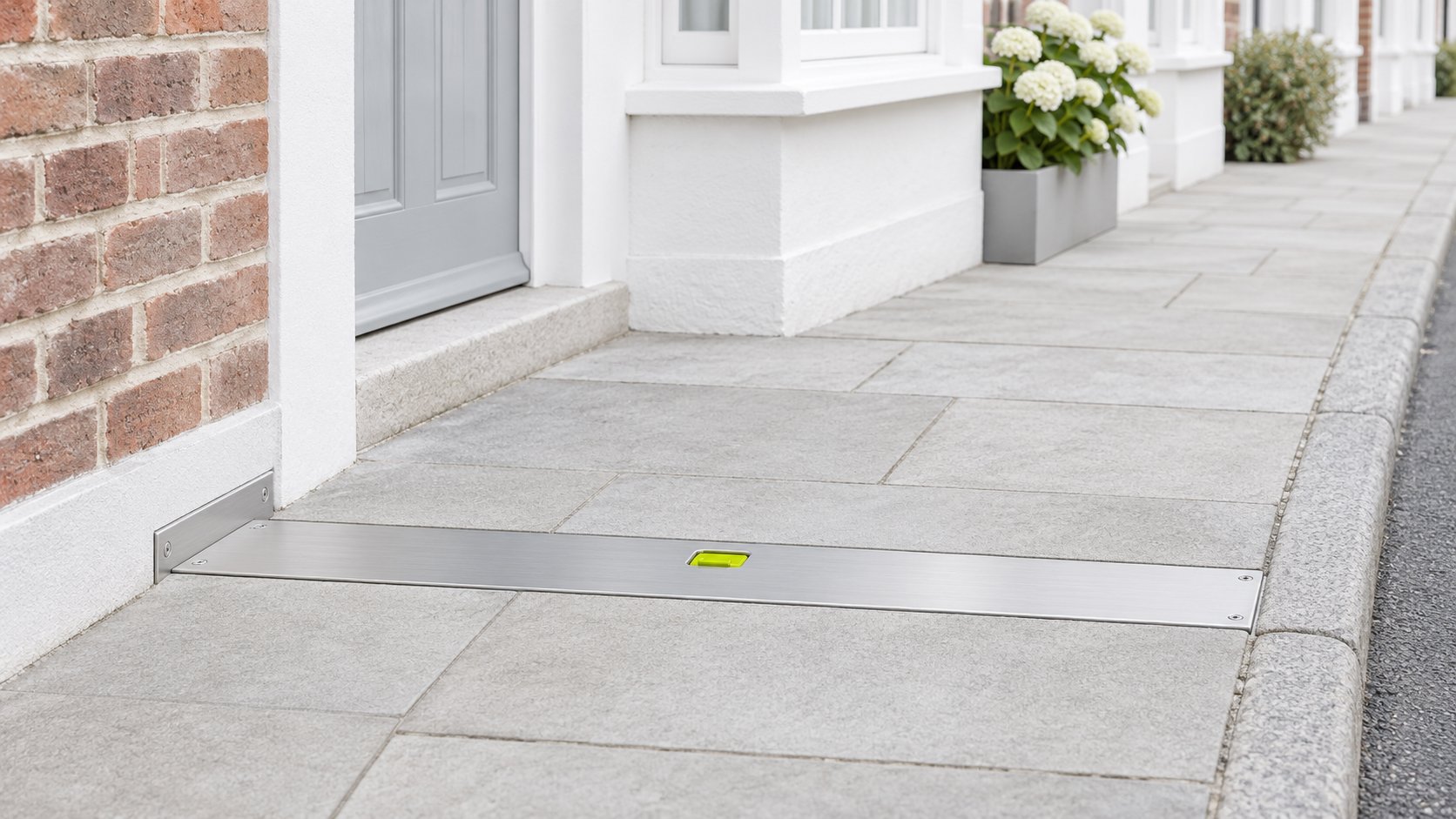
What does Class F allow?
Class F covers the installation, alteration or replacement of a pavement-embedded cable channel that lets a charging cable safely cross the footway from domestic premises to a parked electric vehicle. The work must be carried out by, on behalf of, or with the authorization of a highway authority.[1]
The right does not cover a channel within a scheduled-monument site, the curtilage of a listed building, or a conservation area. If an exclusion applies, ask the local planning authority whether planning permission is needed.[1:1][2]
Who should I ask before installing a channel?
Contact your local highway authority first about its process and whether it permits the proposed installation. The Department for Transport (DfT) says permission must be sought from the local highway authority and/or the local planning authority before installation, depending on the ownership model. For a road not adopted by the highway authority, seek the landowner's permission.[2:1]
Depending on who owns and installs the solution, highway permission under section 178 of the Highways Act, a section 50 street-works licence or work permit, and planning permission may be relevant. A temporary traffic regulation order may be needed for traffic management during installation; a traffic regulation order is needed if the local authority wants to designate on-street parking bays. These requirements do not apply to every installation. Confirm which permissions apply and who must obtain them with the relevant authority.[2:2]
What will the authority consider?
DfT guidance says the local authority should be satisfied about construction, safety, accessibility and other relevant standards before agreeing to an installation on a public highway. Its site-specific examples include pavement width and construction, safe parking, double yellow lines, crossings and junctions, utility assets and access covers, and tree roots.[2:3]
Agree who maintains the channel and what precautions apply. Among its example agreement precautions, DfT lists removing the cable when not charging, keeping covers closed, not running the cable across the road, and ensuring the charge point and property have a valid electrical test certificate. Installing a cross-pavement solution does not give a resident ownership or priority over the parking space outside their home; exceptions may apply, for example if the space is a designated disabled parking bay.[2:4]
Does the 1.5 m footway rule apply to the channel?
The 1.5 m condition is a separate Class D rule for a wall-mounted domestic electrical outlet immediately adjoining a highway, not a Class F channel condition. In that Class D situation, the outlet cannot qualify if it projects more than 0.2 m from the wall or leaves less than 1.5 m between its outermost projection and the edge of the carriageway.[3]
What happens when the channel is no longer needed?
Class F requires the development to be removed as soon as reasonably practicable when it is no longer needed. The pavement in which it was set must also be reinstated as soon as reasonably practicable to its condition before the development was carried out.[1:2] Agree responsibility for removal and reinstatement with the authority and installer before work begins.[2:5]
For charging time, see how long it takes to charge an electric car.
UK legislation, "The Town and Country Planning (General Permitted Development) (England) Order 2015", Schedule 2, Part 9, Class F (read 2026-11-09): https://www.legislation.gov.uk/uksi/2015/596/schedule/2/part/9/crossheading/class-f-crosspavement-solutions-domestic-premises ↩︎ ↩︎ ↩︎
Department for Transport, "Cross-pavement solutions for charging electric vehicles", updated 2026-11-04 (read 2026-11-09): https://www.gov.uk/government/publications/cross-pavement-solutions-for-charging-electric-vehicles/cross-pavement-solutions-for-charging-electric-vehicles ↩︎ ↩︎ ↩︎ ↩︎ ↩︎ ↩︎
UK legislation, "The Town and Country Planning (General Permitted Development) (England) (Amendment) (No. 2) Order 2026" (read 2026-11-09): https://www.legislation.gov.uk/uksi/2026/1056/made ↩︎